The Option / Alt key. There is a great deal of confusion over what Apple refers to as the Option key.If you're using a UK keyboard, chances are this is called the Alt key so it's no wonder most. Apple hard disk 1tb price.
To use any of these key combinations, press and hold the keys immediately after pressing the power button to turn on your Mac, or after your Mac begins to restart. Keep holding until the described behavior occurs. Macbook pro case with hard drive.
The Option key is a powerful ally in the transition from new, beginner user of OS X to the power user that you want to be. There are a ton of hidden features in the Finder alone that are hidden.
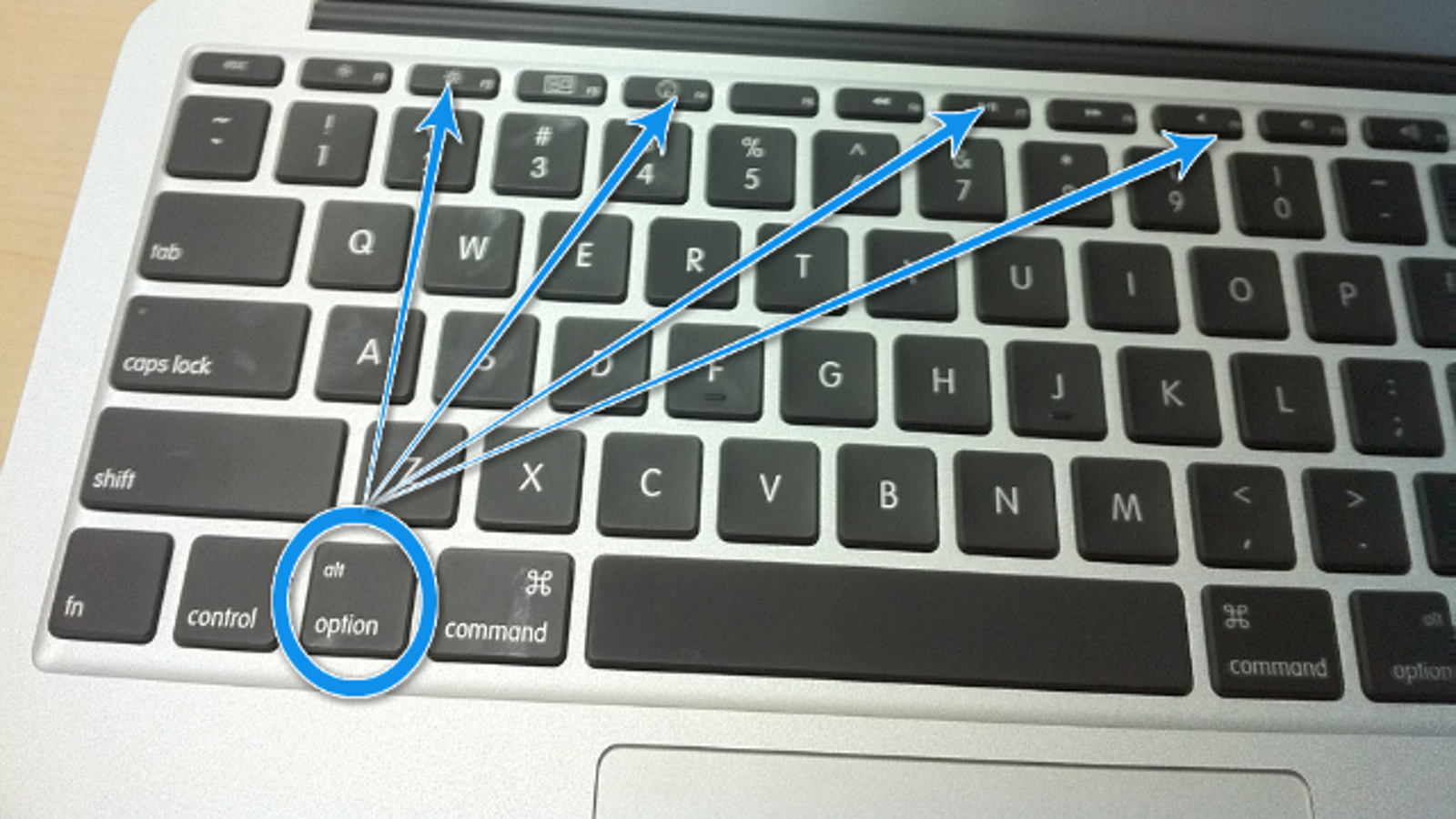
The option key is a keyboard key found on Apple computers. It is used as a to create special characters and as a modifier for other command codes. As shown in the picture, the option key is found next to the control and command keys. Since the mid-1990s, this key has included the small text 'alt' on it.
Command (⌘)-R: Start up from the built-in macOS Recovery system. Or use Option-Command-R or Shift-Option-Command-R to start up from macOS Recovery over the Internet. macOS Recovery installs different versions of macOS, depending on the key combination you use while starting up. If your Mac is using a firmware password, you're prompted to enter the password.
Option (⌥) or Alt: Start up to Startup Manager, which allows you to choose other available startup disks or volumes. If your Mac is using a firmware password, you're prompted to enter the password.
Option-Command-P-R:Reset NVRAM or PRAM. If your Mac is using a firmware password, it ignores this key combination or starts up from macOS Recovery.
Shift (⇧): Start up in safe mode. Disabled when using a firmware password.
D: Start up to the Apple Diagnostics utility. Or use Option-Dto start up to this utility over the Internet. Disabled when using a firmware password.
N: Start up from a NetBoot server, if your Mac supports network startup volumes. To use the default boot image on the server, hold down Option-N instead. Disabled when using a firmware password.
Command-S: Start up in single-user mode. Disabled in macOS Mojave or later, or when using a firmware password.
T: Start up in target disk mode. Disabled when using a firmware password.
Command-V: Start up in verbose mode. Disabled when using a firmware password.
Eject (⏏) or F12 or mouse button or trackpad button: Eject removable media, such as an optical disc. Disabled when using a firmware password.
If a key combination doesn't work
If a key combination doesn't work at startup, one of these these solutions might help:
Option Key On Windows Keyboard
Be sure to press and hold all keys in the combination together, not one at a time.
Shut down your Mac. Then press the power button to turn on your Mac. Then press and hold the keys as your Mac starts up.
Wait a few seconds before pressing the keys, to give your Mac more time to recognize the keyboard as it starts up. Some keyboards have a light that flashes briefly at startup, indicating that the keyboard is recognized and ready for use.
If you're using a wireless keyboard, plug it into your Mac, if possible. Or use your built-in keyboard or a wired keyboard. If you're using a keyboard made for a PC, such as a keyboard with a Windows logo, try a keyboard made for Mac.
If you're using Boot Camp to start up from Microsoft Windows, set Startup Disk preferences to start up from macOS instead. Then shut down or restart and try again.





/image%2F6182320%2F20210221%2Fob_395d66_where-is-the-camera-on-macbook-air.jpeg)
/image%2F6182320%2F20210221%2Fob_06c955_video-camera-editing-software-free.jpeg)
/image%2F6182320%2F20210221%2Fob_31b8b7_screen-capture-macbook-pro-el-capitan.jpeg)
/image%2F6182320%2F20210221%2Fob_d64091_software-adobe-reader-9-1-pc-download.jpeg)